
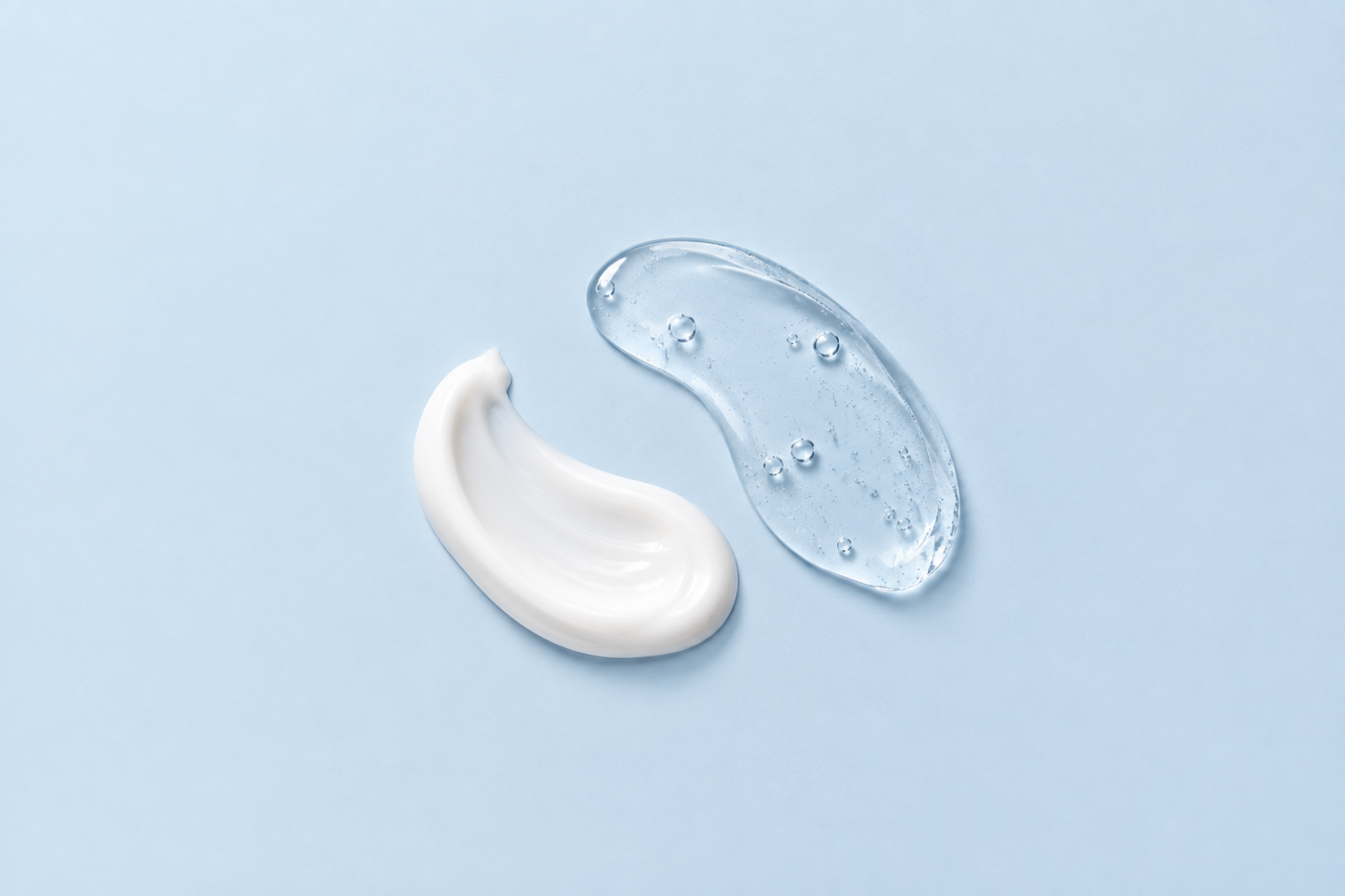
 What does it mean if the skin is dehydrated?
Dehydration – also known as water deficiency – is not a skin type, but a skin condition . It means that the skin’s water content is not optimal, or it is unable to retain water properly.
This can develop on any skin type: normal, dry, combination, and even specifically oily skin.
Characteristics of dehydrated skin may include:
- a tight, stretched feeling;
- a duller, less plump appearance;
- rougher or more uneven skin surface;
- more pronounced fine, surface lines;
- areas appearing dry and “cracked” under makeup;
- increased unpleasant tightness after cleansing.
Fine surface lines are not necessarily genuine, permanent wrinkles. If the skin’s moisture content decreases, it may appear less plump, making fine lines more noticeable. With proper hydration, their appearance can be alleviated.
What can cause dehydration?
Several factors can contribute to skin dehydration. These may include overly harsh or frequent cleansing, excessive exfoliation, damage to the skin barrier, dry air, the heating season, cold or windy weather, or an improperly formulated skincare routine.
Therefore, the lack of water is not necessarily permanent. The condition of the skin can also change with the seasons, the environment, and changes in routine.
What does the dry skin type mean?
Dry skin, on the other hand, is a skin type. It typically produces less sebum, therefore it has fewer natural lipids available to help maintain the skin’s protective barrier and reduce water loss.
Dry skin is often:
- persistently dry or feels tight;
- rougher to the touch;
- prone to flaking;
- less shiny, rarely oily;
- may appear more sensitive and vulnerable;
- it may react more easily to overly strong cleansers or active ingredients.
In the case of dry skin, it is therefore not simply a matter of “lack of water”. The replenishment of lipids and support of the skin barrier can be at least as important as hydration itself.
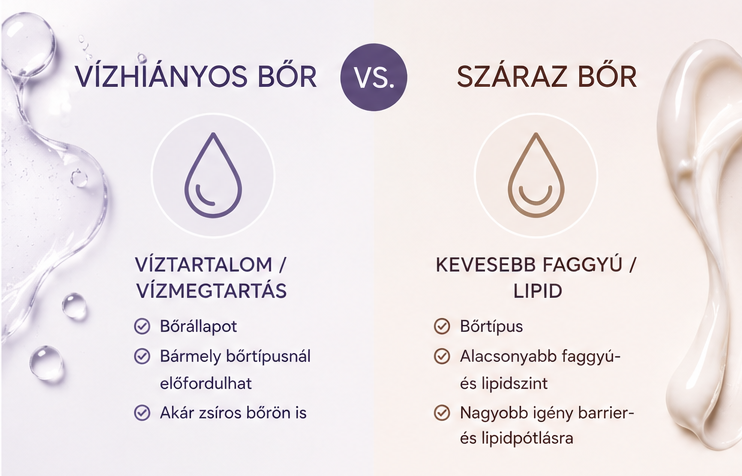
Dry or Dehydrated Skin? – The Most Important Differences
 Dry or Dehydrated Skin? – The Most Important Differences
| Dehydrated Skin | Dry skin | |
|---|---|---|
| What is it? | Skin condition | Skin type |
| What is the main problem? | Inadequate moisture content, increased water loss | Lower sebum/lipid level |
| Can it be oily? | Yes | Increased sebum production is not typical |
| Can it feel tight? | Yes | Yes |
| Can it be dull? | Yes | Yes |
| Can peeling occur? | Yes | It can be common |
| What should be focused on? | Hydration + reduction of water loss | Lipid replenishment + hydration + barrier support |
It is easy to confuse the two precisely because of similar symptoms. For example, skin tightness alone does not prove that your skin type is dry.
Can oily skin also be dehydrated?
 Can oily skin also be dehydrated?
Yes – and this is one of the most common misunderstandings in skincare.
The amount of sebum and the skin’s proper moisture content are not the same thing. Therefore, skin can produce a lot of sebum while simultaneously being dehydrated.
At times, the seemingly odd combination may occur where the skin shines and becomes oily, yet still feels tight or stretched.
A common mistake in such cases is to try to “dry out” the skin with stronger cleansers, alcoholic or highly mattifying products. However, this can further worsen comfort and the condition of the barrier.
Oily skin also needs hydration – it just often responds better to lighter, water-based, gel textures.
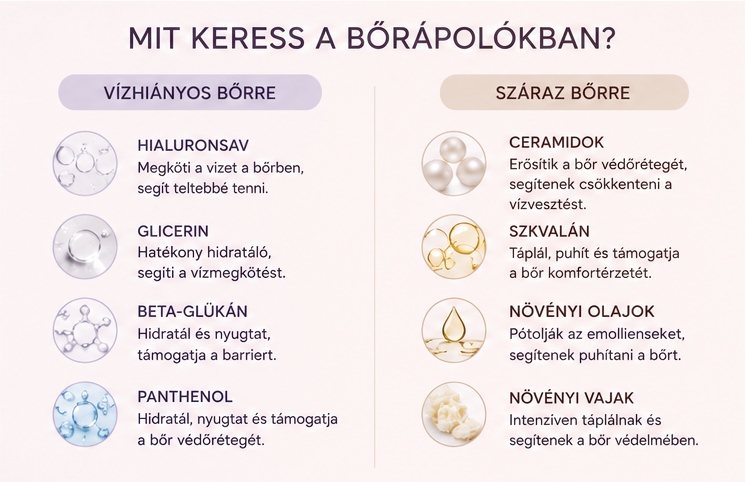
What ingredients should you look for in dehydrated skin?
In case of dehydration, it is advisable to look for ingredients that help retain water in the upper layers of the skin and support the skin barrier.
Hyaluronic acid
Hyaluronic acid is a well-known humectant, that is, a water-binding ingredient. You can find it in various molecular sizes in many hydrating toners, essences, serums, and creams.
It can help give the skin a plumper, more hydrated feel, making it especially useful in cases of water deficiency.Glycerin
Less “trendy”, yet glycerin is one of the most reliable moisturizing ingredients in cosmetics. It also acts as a humectant and helps retain water in the upper layer of the skin.
So, you don’t necessarily have to look for exotic active ingredients: a well-formulated moisturizer containing glycerin can do a great deal to enhance skin comfort.
Beta-glucan
Due to its hydrating and skin-soothing properties, beta-glucan can be an especially good choice when sensitivity or uncomfortable tightness accompanies dehydration.
Panthenol
Known as vitamin B5, panthenol is a moisturizing, soothing, and barrier-supporting ingredient, which is why you will often find it in routines for both dehydrated and sensitive skin.
What ingredients should you look for in dry skin products?
In the case of dry skin, alongside moisturizing ingredients, those substances that support the skin barrier with lipids and help reduce water loss can be particularly important.
Ceramides
Ceramides are naturally found in the skin and play an important role in the construction of the skin barrier.
The stratum corneum is often imagined as a brick wall: the skin cells are the “bricks”, and the lipids between them – including ceramides – are the “mortar”. If this system does not function optimally, the skin loses water more easily and can become more sensitive.
Squalane
Squalane is an easily usable emollient that can help make the skin softer and smoother while supporting its comfort.
Many dry skin types tolerate it well, but naturally, the entire formula matters here, not just a single ingredient.
Vegetable oils and butters
Jojoba, argan, sunflower and other vegetable oils, as well as shea butter for example, can help replenish emollient components and alleviate the sensation of dry, rough skin.
Not all dry skin requires very heavy, greasy creams. The appropriate texture should always be chosen based on your own skin’s comfort.
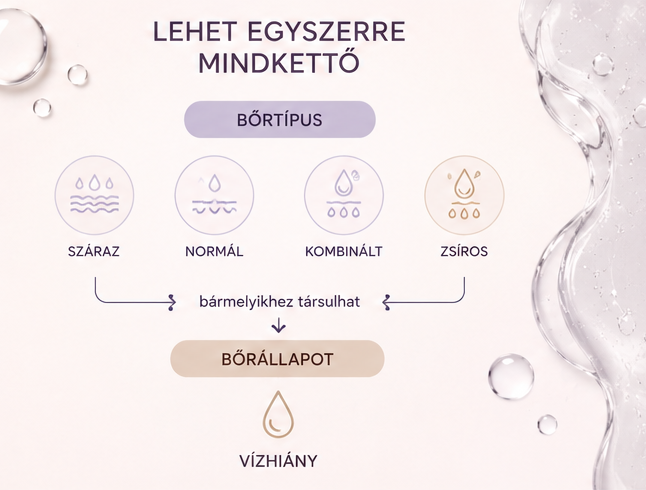
What if the skin is both dry and dehydrated at the same time?
This is not uncommon at all.
Since dryness is a skin type and dehydration is a skin condition, both can be present simultaneously.
In such cases, a light hyaluronic acid serum alone often does not provide enough comfort. It is advisable to support the skin from multiple angles:
- with gentle cleansing;
- with humectant, water-binding ingredients;
- with barrier-supporting lipids;
- with an appropriate moisturising cream that helps reduce water loss;
- with consistent sun protection during the day.
The layering approach of Korean skincare can be particularly practical here: you don’t necessarily have to rely on a single very heavy cream for everything, but you can combine lighter moisturising layers with a suitable sealing treatment.
5 common mistakes with dehydrated skin
 5 common mistakes with dehydrated skin
1. “My skin is oily, so I don’t need a moisturizer”
You do.  Oily skin and dehydration are not mutually exclusive.
The solution is often not to stop using the moisturizer, but to choose a more pleasant, light, gel or emulsion texture.
2. Overly harsh cleansing
If the skin regularly feels uncomfortably tight after facial cleansing, it is worth reviewing the cleanser and the frequency of cleansing.
The sensation of “crisply clean” is not the goal.
3. Too many exfoliants and active ingredients
Acids, retinoids and other active components can be beneficial, but more is not necessarily better. An overloaded routine can lead to irritation and deterioration of the barrier function.
4. Only a hydrating serum, nothing else
A humectant serum can be an excellent part of the routine, but especially for drier skin, it is advisable to follow it with an appropriate moisturizing cream.
The goal is not only to introduce hydrating ingredients but also to reduce water loss.
5. Continuous Introduction of New Products
If you start using five new products at once, it is difficult to determine which one is beneficial and which one causes problems.
It is advisable to introduce new cosmetics gradually and allow time for the skin to adjust.
How can you tell what your skin needs?
 How can you tell what your skin needs?
Don’t try to deduce it from a single sign.
Observe, for example:
- whether your skin becomes oily during the day;
- whether the dryness and tight feeling is persistent or only occasional;
- what your skin is like immediately after cleansing;
- whether its condition changes with the seasons;
- whether comfort improves with a more hydrating routine;
- whether there is flaking, rough surface or increased sensitivity.
And perhaps most importantly: do not rigidly adhere to a label.
You may fundamentally have combination skin, while in winter your skin becomes dehydrated. You may have dry skin that occasionally requires even more hydration. The skincare routine should not follow the category, but the current needs of the skin.sum dolor sit amet, consectetur adipiscing elit. Ut elit tellus, luctus nec ullamcorper mattis, pulvinar dapibus leo.
How to build a routine for dry or dehydrated skin?
 How to build a routine for dry or dehydrated skin?
It is not necessary to establish a ten-step routine immediately.
The basics remain simple:
Morning: gentle cleansing as needed → moisturising → sunscreen.
Evening routine: thorough removal of makeup and sunscreen → gentle water-based cleansing → moisturising.
On this base, toner, essence, serum or other targeted treatments can be applied later.
For dehydrated skin, a good choice might be a moisturising toner or essence + humectant serum + light moisturiser, whereas for dry skin, it may be advisable to finish with a cream richer in ceramides, squalane or other emollient ingredients.
In the MyBelle range, you can also search for Korean skincare products tailored to your skin’s current needs by filtering according to Skin Condition/Skin Problem and Active Ingredients.
Specific product examples for assembling a routine
The following compilations are examples of how you can build a simple, three-step routine for dehydrated or dry skin. It is not necessary to replace all products at once – the key is to choose formulas that suit your skin’s current needs.
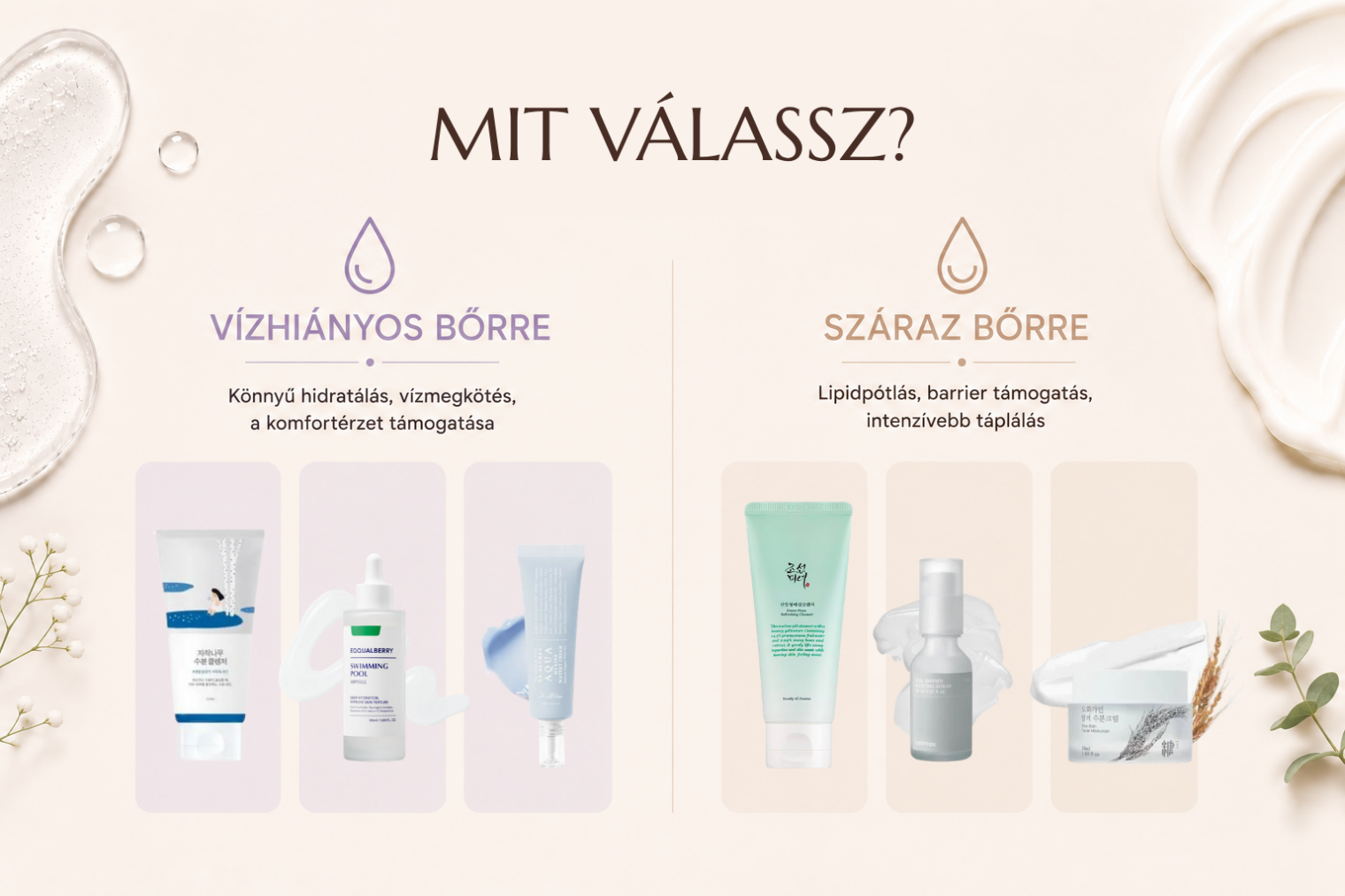
 Simple routine for dehydrated skin:
Round Lab Birch Juice Moisturizing Cleanser → EQQUALBERRY Swimming Pool Ampoule → Dr.Althea Aqua Marine Watery Cream
 Simple routine for dry skin:
Beauty of Joseon Green Plum Refreshing Cleanser → Celimax Dual Barrier Skin Boosting Serum → House of Dohwa Rice Bran Facial Moisturizer
In the morning, the final step of both routines should be appropriate sun protection. The product examples serve as a starting point; if your skin is both dry and dehydrated, it is advisable to combine the moisturizing and barrier-supporting ingredients from both groups.
Frequently Asked Questions about Dry and Dehydrated Skin
 Frequently Asked Questions about Dry and Dehydrated Skin
Can oily skin be dehydrated?
Yes. Sebum production and the skin’s water content are two different things. Therefore, the skin can be oily, shiny, and at the same time dehydrated, with a tight feeling.
Can the skin be both dry and dehydrated at the same time?
Yes. Dry skin is a skin type, while dehydration is a temporary or more persistent skin condition. Therefore, dry skin can become dehydrated just like any other skin type.
How can I be sure whether my skin is dry or dehydrated?
It is not advisable to make a definite decision based on a single home “test”. Rather, observe the skin’s behaviour over a longer period. If it fundamentally produces little sebum, is regularly dry, rough, and prone to flaking, it is more likely to be a dry skin type. If tightness occurs periodically while the skin may even become oily, dehydration may also be the underlying cause.
Why does my skin feel tight after cleansing?
The strong tightness after cleansing may indicate that the cleanser used or the method of cleansing is too harsh for your skin. Try a gentler facial cleanser, avoid water that is too hot, and observe whether your skin’s comfort improves.
How long does it take for dehydrated skin to improve?
There is no exact time that applies to everyone. It depends on the cause of the dehydration, the condition of the barrier, environmental factors, and the routine used. The goal is not a quick “replenishment”, but rather establishing a consistent routine that supports the skin’s proper hydration and protective layer.
What ingredients should I look for in dehydrated skin?
A good starting point can be hyaluronic acid, glycerin, beta-glucan, and panthenol. If the barrier also needs support, it is worth looking for ceramides, squalane, and other emollient ingredients.
Will drinking plenty of water solve dehydrated skin?
Adequate fluid intake is naturally important for the body, but the problem of dehydrated skin cannot be “corrected” simply by drinking more water. The skin’s water content and water loss are influenced by several factors, so proper external skin care also plays a role.
The essence in brief
If you remember only one thing from this article, let it be:
Dry skin primarily has fewer lipids, while dehydrated skin has a reduced proper water content – and both can occur simultaneously.
Therefore, do not only ask, “What is my skin type?”, but also:
What does my skin need right now?
A good skincare routine is not good because it is long or filled with trendy active ingredients. It is good because it adapts to the current condition of your own skin. 
