
- By admin
- 2023 May 11.
- Skincare Tips, Active Ingredients
Retinol has been one of the most well-known anti-aging ingredients for years, but recently you may have come across the name retinal more frequently. The two sound very similar, yet they are not the same – and the difference is not just a single letter.
There is also retinyl palmitate, as well as bakuchiol, often referred to as “plant-based retinol.” What does each one do? Is retinal really stronger than retinol? Which one is advisable to choose as a beginner, and what do the percentages on the packaging actually mean?
In this guide, we will go through the differences so that by the end, you will not only be able to distinguish the names but also which approach suits your skin and routine best.
🧬 What is a retinoid?
Retinoids are a family of compounds related to vitamin A. This group includes, among others, retinol, retinal – also known as retinaldehyde – various retinyl esters, and retinoic acid.
They are special in skincare because, when formulated appropriately and used regularly, they can help improve certain visible signs of photoageing, such as fine lines, uneven skin texture, and pigmentation. However, retinoids do not exert their effects in the same form.
🔬 The metabolic pathway of retinoids
The retinoic acid is the biologically active form that exerts its effect through retinoid receptors. Retinyl esters require several conversion steps, retinol requires two, and retinal only one step to be converted into retinoic acid.
Therefore, retinal is biochemically closer to retinoic acid than to retinol. However, this does not mean that every retinal-containing cosmetic is automatically “stronger” or “faster” a certain number of times than all retinol products. The final formula, concentration, stability, and the method of delivering the active ingredient all matter.
✨ Retinol – the classic
Retinol is one of the best-known cosmetic retinoids. In the skin, it must first convert to retinal, then to retinoic acid:
retinol → retinal → retinoic acid
When properly formulated and used regularly, it can help reduce the visibility of fine lines, uneven skin texture, and pigmentation. Retinol has a longer history of cosmetic research behind it than many newer anti-aging ingredients.Who might it be a good choice for?
For those seeking a classic, well-researched cosmetic retinoid and who wish to gradually build their anti-aging routine. However, as a beginner, it is not the word “retinol” alone that matters: the specific concentration and the complete formula are equally important.
🌙 Retinal – one step closer
The retinal, or retinaldehyde, also belongs to the retinoids, but in the skin it is separated from retinoic acid by only a single conversion step:
retinal → retinoic acid
This is one of the reasons why it has become increasingly popular in Korean skincare in recent years. Clinical studies have shown that formulas containing 0.05% and 0.1% retinaldehyde improved, among other things, skin texture and certain indicators of photoageing.
So, is retinal better than retinol? Not necessarily. Biochemically, it is closer to retinoic acid, but the performance of a finished cosmetic product cannot be predicted solely from one ingredient in the INCI list. The concentration, stabilisation, encapsulation or liposomal technology, and the complete formula all influence how the product works in practice.
🌿 Retinyl palmitate – a milder form of retinoid
Retinyl palmitate (Retinyl Palmitate) is a retinyl ester, which is positioned further away from the active retinoic acid in the conversion chain:
retinyl palmitate → retinol → retinal → retinoic acid
Therefore, it is generally encountered as a milder retinoid in cosmetics. However, this does not mean that every product containing retinyl palmitate is automatically suitable for sensitive skin, nor that the concentration and the complete formula can be disregarded.
Retinyl palmitate should rather be considered a milder retinoid option, whose suitability must always be assessed based on the entire formula.
🌸 Bakuchiol – a non-retinoid, yet an interesting anti-ageing active ingredient
Bakuchiol is often referred to as “plant-based retinol”, but this is professionally inaccurate. Bakuchiol is not a retinoid, and it does not convert into retinoic acid.
It is a plant-derived compound that may exhibit effects on certain biological processes relevant to skin ageing partly similar to those of retinoids, but it operates with a different chemical structure and mechanism.
In a 12-week randomised study, 0.5% bakuchiol was compared to 0.5% retinol. Both groups showed improvement in the degree of wrinkles and hyperpigmentation, while the retinol group reported more peeling and stinging sensations. This is promising data, but it does not follow from a smaller study that bakuchiol would generally be as effective as retinol.
It is therefore advisable to consider it as an independent anti-aging active ingredient, rather than simply as a retinol substitute.
⚖️ Retinol or retinal – which one should you choose?
If you are a complete beginner, it is not mandatory to start with retinol, and it is also not true that retinal is only for “advanced” users. Much more important is the specific product concentration, formulation, and the current condition of your skin.
Retinol: can be a good choice if you are looking for a classic, well-researched cosmetic retinoid and want to gradually build up your routine.
Retinal: can be particularly interesting if you are looking for a targeted retinoid formula and it is important to you that the active ingredient requires only a single conversion step from retinoic acid.
Bakuchiol: may be considered if you do not wish to use retinoids but are seeking an anti-ageing active ingredient – bearing in mind that there is currently a smaller clinical evidence base behind it.
🧪 What do the percentages mean?
In retinoid products, it is particularly important to distinguish the concentration of the pure active ingredient from the percentage of a complex or carrier system that itself contains retinoid.
For example, the designation “Retinal Liposome 2%” does not necessarily mean 2% pure retinal. It may also indicate a 2% concentration of a liposomal complex containing retinal.
Therefore, it is not advisable to compare two products solely based on the largest number displayed at the front of the packaging. You should always check what the percentage refers to and what the manufacturer states about the actual active concentration.
💜 Four different directions from the MyBelle range
The following four products are not in “order of strength”. Rather, they present four different approaches: a classic retinol serum, a retinaldehyde formula, a combined retinoid product, and a retinoid-free bakuchiol serum.
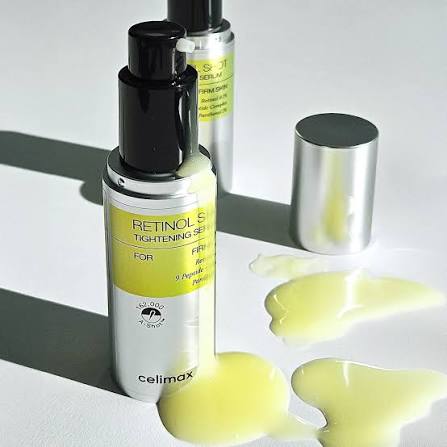
Celimax The Vita-A Retinol Shot Tightening Serum
The Celimax serum contains 0.1% retinol, making it a good example of a product where the manufacturer clearly states the pure retinol concentration. The formula also includes panthenol, allantoin, and several peptides.
Who might it be a good choice for?
For those looking for a classic, well-defined retinol formula and who want to specifically incorporate retinol into their evening routine.
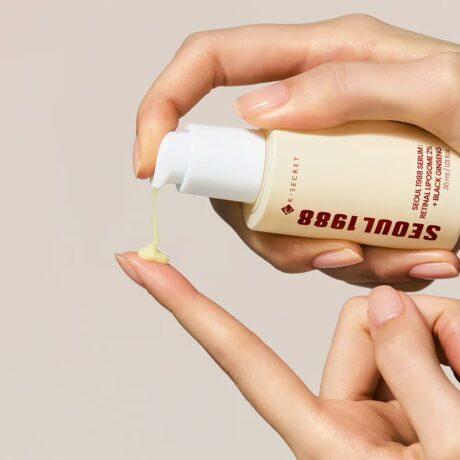
K-SECRET SEOUL 1988 Serum: Retinal Liposome 2% + Black Ginseng
Retinal serum with black ginseng and liposomal carrier system. The “Retinal Liposome 2%” in the product name does not mean 2% pure retinal, making it a good practical example for the correct interpretation of percentage indications.
Who might it be a good choice for?
For those who are consciously looking for a retinal anti-aging formula and want a more complex skincare formulation alongside the retinoid.
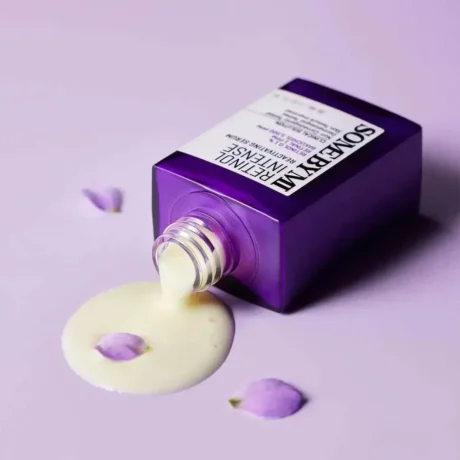
SOME BY MI Retinol Intense Reactivating Serum
This formula contains retinol, retinal and bakuchiol as well. Therefore, it should not be considered simply as a “classic retinol” serum, but rather as a combined anti-aging formula.
Who might it be a good choice for?
For those who are not looking for a formula built around a single retinoid, but want several complementary anti-aging ingredients in one product.
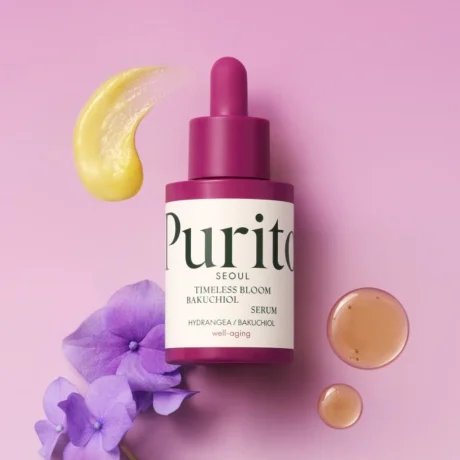
PURITO SEOUL Timeless Bloom Bakuchiol Serum
The PURITO SEOUL serum contains 1% bakuchiol. It is a non-retinoid product, making it a good example of how bakuchiol can be incorporated as a standalone anti-aging ingredient in a routine.
Who might it be a good choice for?
For those who do not wish to use retinoids but are looking for a targeted anti-aging formula based on bakuchiol.
🪜 How to introduce retinol or retinal?
With retinoids, the principle of “the more, the better” can easily lead to irritation. As a starting point, 1–2 evenings per week is usually sufficient, and if the skin tolerates it well, the frequency can be gradually increased according to the product’s usage instructions.
After cleansing, apply to dry skin, then complete the routine with a moisturising cream. For more sensitive skin, the sandwich method can also be tried: moisturiser → retinoid → moisturiser. This is not a mandatory step, but an option to help with tolerance.
In the first weeks, mild dryness or flaking may occur. However, severe burning, persistent redness, or painful irritation are not signs to be “endured.” In such cases, reduce the frequency or take a break.
🧩 What can retinol and retinal be combined with?
Alongside retinoids, barrier-supporting and hydrating ingredients can be beneficial, such as niacinamide, ceramides, panthenol, hyaluronic acid or centella.
It is advisable for beginners to use stronger AHA/BHA exfoliants, high-concentration acidic vitamin C, or other potentially irritating actives on different evenings. This is not because these ingredients are “forbidden together”, but because for more sensitive skin, using them simultaneously can be too much of a burden.
If the skin later tolerates the combination well, it is not necessarily required to separate them permanently.
☀️ Sun protection alongside retinoids
Retinoids are generally used in the evening routine. Some retinoid forms and formulations are less stable in light, and during their introduction, the skin may temporarily become more sensitive and drier.
Daily sun protection is therefore especially important alongside a retinoid routine. However, it is not advisable to oversimplify the issue to the statement that “retinol makes the skin sensitive to light.” The key point is that UV radiation itself contributes to photoageing, so the foundation of an anti-ageing routine is daily SPF 30–50.
👁️ Retinol, retinal or bakuchiol for the eye area?
The skin around the eyes is thinner and more sensitive, so it is especially important to use a formula specifically developed for this area and to introduce it gradually. It is not necessary to apply the stronger serum used on the face all the way under the eyes.
In the MyBelle range, you will find three different approaches – not declaring a “winner”, but to assist your choice:
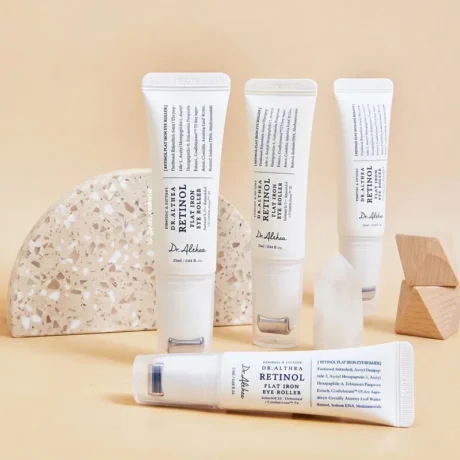
Retinol
Dr. Althea Retinol Flat Iron Eye Roller
Retinol eye contour care with massaging applicator.
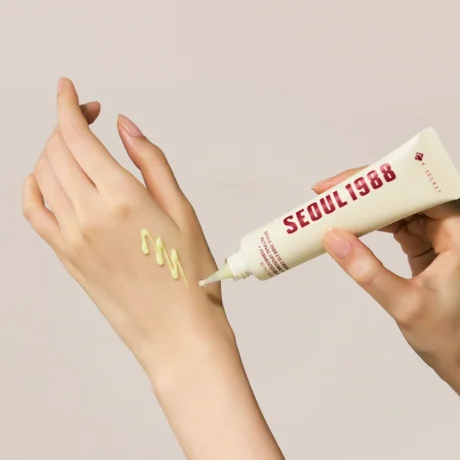
Retinal
K-SECRET SEOUL 1988 Eye Cream
Retinal liposomal eye contour care with fermented ingredients.
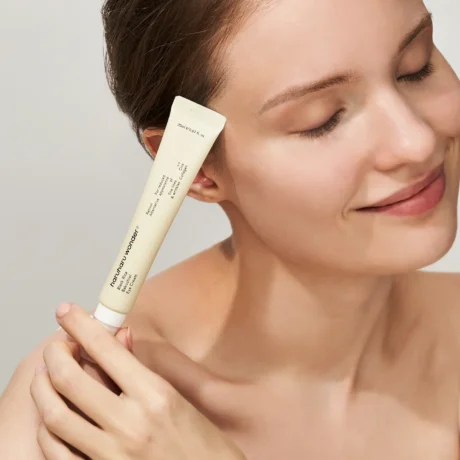
Bakuchiol
HaruHaru Wonder Black Rice Bakuchiol Eye Cream
With 5000 ppm bakuchiol and fermented black rice.
🤰 Is retinol or retinal safe to use during pregnancy?
Retinoids should be avoided during pregnancy. This applies to prescription retinoids as well as OTC retinol-containing cosmetics.
If you are planning a baby, are pregnant, or breastfeeding, it is advisable to consult a doctor about your current skincare routine.
In the case of bakuchiol, it is also not advisable to automatically describe it as a “pregnancy-safe retinol alternative.” Although it is not a retinoid, there is still insufficient data to make a general safety guarantee for all situations.
❓ Frequently Asked Questions
Is retinal stronger than retinol?
Retinal is one conversion step closer to active retinoic acid, but this does not mean that every retinal-containing cosmetic is automatically stronger than every retinol-containing one. The concentration and the formulation are decisive.
Is it true that retinal is 11 times faster than retinol?
This should not be regarded as a universally proven clinical fact. The conversion pathway is shorter, but this does not imply a universal 11× performance difference between finished cosmetic products.
Is it possible to use retinol every night?
If the skin tolerates it well after gradual introduction, some formulations can be used more frequently. However, it is not necessary to reach daily use at all costs: consistency is more important than maximum frequency.
Retinol or retinal for beginners?
Both are possible options. Don’t just look at the name of the active ingredient: the concentration, the delivery system, and the complete formula are equally important.
Is bakuchiol a retinoid?
No. Chemically, bakuchiol is not a retinoid and does not convert into retinoic acid.
How long does it take to see results?
Retinoids are not active ingredients that work within a few days. Clinical studies typically assess use over several weeks or months, so patience and consistency are important.
✅ Summary – retinol, retinal or bakuchiol?
Retinol is a well-researched, classic cosmetic retinoid. Retinal is one conversion step closer to active retinoic acid. Retinyl palmitate starts further back in the conversion chain, so it is generally encountered as a milder retinoid. Bakuchiol is not a retinoid but an independent plant-derived anti-ageing ingredient.
The best choice is not necessarily the one with the highest number on the packaging. A good retinoid routine is one that your skin tolerates, that you can use consistently, and alongside which you do not forget hydration and daily sun protection.
If you use multiple active ingredients, it is always advisable to consider the total load of the entire routine – not just a single component.
📚 References used
• Cosmetic retinoids – overview, 2024
• Clinical study of 0.05% and 0.1% retinaldehyde
• Comparative study of retinaldehyde and retinoic acid
• Randomised study of bakuchiol and retinol
• American Academy of Dermatology – use of retinoids and retinol
• American Academy of Dermatology – skincare during pregnancy
