

- By admin
- 2023 February 12.
- Skincare Tips, Beauty
The glass skin, or “glass-like skin”, is one of the most well-known trends in Korean skincare. When hearing the term, many imagine poreless, perfectly smooth, radiant skin – the kind seen on social media or in a carefully lit campaign photo.
The reality is much more interesting – and fortunately much more human.
Glass skin does not mean flawless skin. It does not erase pores, does not scrub away the natural skin texture, and does not turn the face into porcelain.
It rather describes a hydrated, plump, smoother and fresh complexion whose surface reflects light more evenly. This gives it the fresh, almost translucent radiant appearance from which the trend takes its name.
And this does not necessarily require a ten-step routine.
Indeed: sometimes it is precisely by using less, but more consciously that we get closer to it.
✨ What does glass skin really mean?
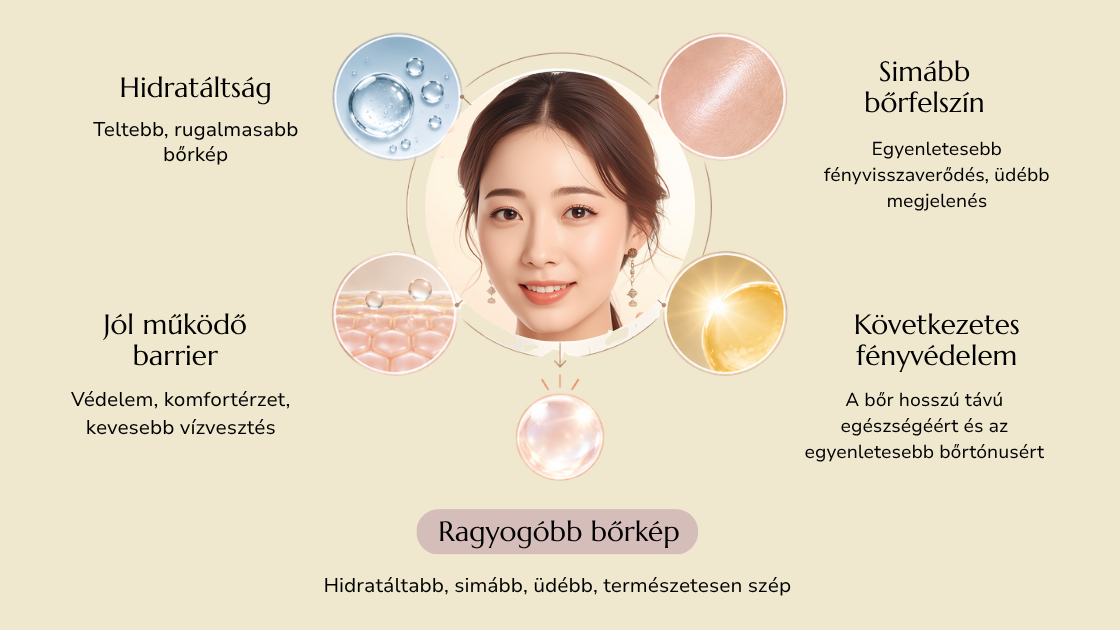
The term “glass skin” is not a dermatological concept or a defined skin condition. It is much more an aesthetic expression for a skin appearance that simultaneously looks hydrated, plump, smooth, more even, and naturally radiant.
This is an important distinction.
Glass skin is not simply shiny skin. Oily skin caused by excessive sebum production and a hydrated, healthily glowing skin surface are not the same.
And it is not about eliminating pores either. Pores are a natural part of the skin. The same applies to fine lines and natural texture.
Glass skin ≠ perfect skin
This is perhaps worth stating separately.
You can have radiant, beautiful skin even if your pores are visible.
You may have freckles. You might have a few fine lines. Occasional spots or pigmentation marks can occur. Real human skin up close does not look like a beauty filter.
In addition to skincare, the “glass skin” appearance seen on social media can also be influenced by lighting, the camera, makeup, and sometimes image processing.
For this reason, we believe that glass skin is a much more useful goal if we understand it not as perfection, but as healthy skin and a fresh appearance.

💎 What makes the skin radiant?
There is no single “glass skin active ingredient”, nor is there a cosmetic product that alone creates this skin appearance. Several factors work together.
💧 Proper hydration
A properly hydrated stratum corneum may appear more elastic, plumper, and smoother. However, if the skin is dehydrated, its surface can become rougher, fine lines may become more pronounced, and the overall appearance may seem duller.
Moisturising cosmetics can support the skin’s water balance and barrier function in various ways: within a single formulation, humectant, emollient, and occlusive ingredients may work together.
We will write a separate article about this soon, as the humectant–emollient–occlusive trio deserves its own guide.
✨ Smoother skin surface
Light reflects more evenly from a smoother surface. This is why well-hydrated, less rough skin may appear more radiant.
Proper exfoliation can help refine the surface in certain skin conditions, but glass skin is not a justification for overusing acids or exfoliants.
Irritated, reddened, damaged barrier skin does not get closer to glass skin by applying yet another exfoliant.
🛡️ Well-functioning skin barrier
The skin barrier helps, among other things, to limit water loss through the skin and protect the skin from the effects of the external environment. If its function is impaired, dryness, tightness, flaking, or increased sensitivity may occur. Moisturising products can support the barrier’s function through several mechanisms.
In other words, one of the most important questions of the glass skin routine is not: “What else should I put on my skin?”
But rather, from time to time: “What does it not need right now?”
☀️ Consistent sun protection
Sun protection must not be overlooked here either.
UV radiation contributes to premature skin ageing and changes in pigmentation. In a randomised study following 903 adults, the group using a daily broad-spectrum sunscreen showed less skin ageing over 4.5 years compared to those who used sunscreen at their own discretion.
Glass skin is therefore not only about what we apply to the skin in the evening routine. It is also about how we protect it during the day.
🧴 Is a 10-step Korean routine necessary for it?
Reference No.
Sounds familiar? 😄
The glass skin trend and multi-step Korean skincare are often linked, but radiant skin does not depend on the number of cosmetics used in the routine.
A well-structured routine could be, for example:
gentle cleansing → hydrating toner or essence → targeted serum → moisturizer → sunscreen in the morning
And not every skin type necessarily needs every step.
If you would like to learn more in detail about the classic steps of Korean skincare, including what each step is for and what can safely be skipped, read our article The 10-Step Korean Skincare Routine – A Complete Guide.
The same principle applies in the glass skin routine: it is not about how many products you use, but that each one has a purpose and role.
🌿 5 steps that can bring you closer to the glass skin complexion
1. Clean gently
Clean skin is important, but over-cleansed skin is not the goal.
In the evening, when wearing makeup or more stubborn sunscreen, combining an oil-based and a water-based cleanser can be useful. At other times, a single suitable cleanser may be sufficient.
After washing the face, an unpleasantly tight, “squeaky clean” feeling is not a prerequisite for effective cleansing.
2. Provide moisture to the skin – even in light layers
This is where Korean skincare truly becomes interesting.
A light hydrating toner or essence can be a convenient way to add an extra layer of hydration to your routine. For dehydrated skin, certain lightweight products can even be applied in multiple thin layers, provided the skin tolerates this well.
But even here, the number of layers is not the goal.
A well-chosen moisturizing layer is worth more than five that you do not need.
3. Manage what truly bothers you
If your skin doesn’t feel radiant due to dullness or uneven skin tone, targeted serums can come into play here.
Niacinamide, vitamin C derivatives, azelaic acid, or other ingredients aimed at pigmentation and skin tone can be useful in various formulations – but you don’t need to use them all at once.
For example, if you are struggling with pigmentation spots or discoloration left after acne, the path to glass skin may be different for you than for someone whose skin is primarily dehydrated.
That is why we prefer the question: “What does my skin need?” rather than: “What do I need to buy for glass skin?”
4. Complete the hydration with a cream suitable for your skin
A moisturising cream can help maintain the skin’s moisture content, soften the surface, and support the skin barrier.
However, there is no single glass skin texture here either.
On dry skin, a more nourishing cream can feel pleasant. On oily or combination skin, a light gel cream or emulsion may be more comfortable. The season also matters: what is perfect in January may be too much in July.
5. Finish in the morning with sunscreen
Sunscreen is the final step in the morning skincare routine.
And it also has a pleasant side effect from the perspective of glass skin: many modern Korean sunscreens with a light, hydrating formula can provide a fresher, subtly radiant finish immediately after application.
However, this is only an optical bonus. The real function of the sunscreen is UV protection.
🧪 What ingredients should you look for in a glass skin routine?
You do not need to learn a separate “glass skin INCI list.” It is more useful to know what problem you are looking to solve.
For hydration
glycerin, hyaluronic acid and its derivatives, panthenol, beta-glucan, urea.
To support the skin barrier
ceramides, squalane, fatty acids, cholesterol, as well as various emollient and occlusive ingredients may play a role in the appropriate formulations.
For a more even, radiant complexion
niacinamide, various forms of vitamin C, and depending on the specific issue, azelaic acid, arbutin, tranexamic acid or kojic acid.
However, there is no need to create a glass skin cocktail from them. 😄 A targeted, carefully selected active ingredient is often a better choice than layering four different serums against pigmentation spots on top of each other.
For soothing and comfort
panthenol, centella asiatica, beta-glucan and other soothing, moisturizing ingredients can be particularly interesting if the skin is prone to sensitivity.
🌸 Glass skin for every skin type? Yes – but not in the same way
Dry or dehydrated skin
Here, the focus is generally on hydration and reducing water loss. Light moisturizing layers can be beneficial, followed by a cream that helps keep the skin comfortable. If the skin is dry and also lacking moisture, a hyaluronic acid serum alone may not solve the problem.
Oily or combination skin
Glass skin does not mean making the skin shiny with thick creams. A light hydrating toner, essence or serum, and a pleasant gel cream may be sufficient. The goal here is also hydrated radiance, not oily shine.
Sensitive skin
This is especially true here: do not let the trend dictate. A simpler, soothing and barrier-supporting routine can be a much better starting point than multiple exfoliating and radiance-boosting actives at once. If the skin is currently irritated, the glass skin project can wait.
Skin prone to acne
Acne-prone skin can also be hydrated and radiant. However, you don’t need to use many layers or rich textures that your skin dislikes just for a glowing complexion. First, it is worth building the routine according to the needs of acne-prone skin; the glow cannot override this.
💜 MyBelle glass skin favourites
We do not intend to impose a complete routine; rather, we present a selection of products with different roles, from which you can choose according to the needs of your own skin.
SKIN1004 Madagascar Centella Hyalu-Teca Glass Skin Milk
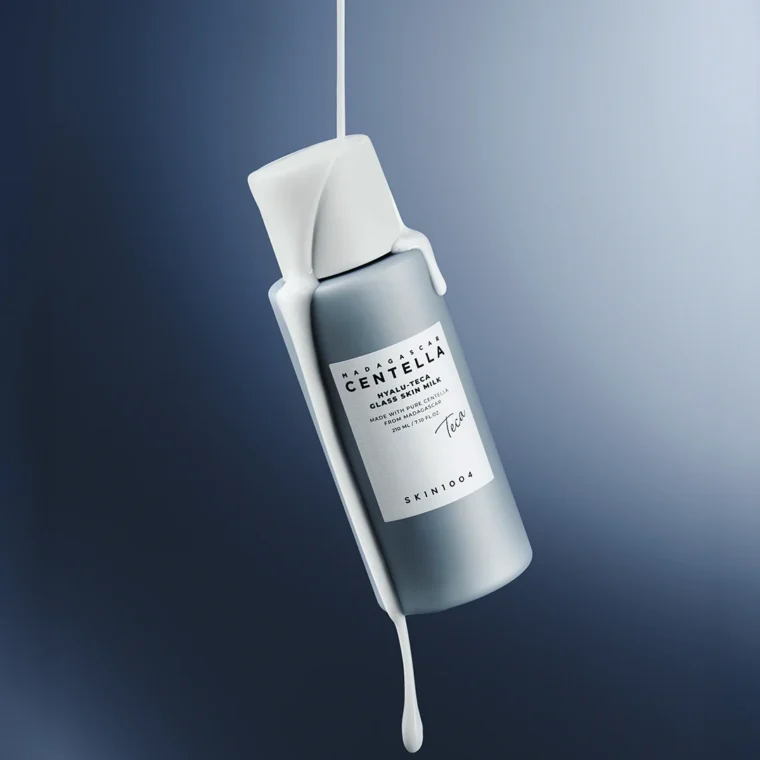
If there is a product that naturally belongs in this article, it is this one. 😄
The lightweight, milky essence combines moisturizing and skin-conditioning ingredients: among others, the formula contains glycerin, hyaluronic acid, niacinamide, panthenol, ectoin, beta-glucan, and Ceramide NP. Its light, layerable texture makes it particularly well-suited to the hydration-focused approach on which a glass skin routine would be built.
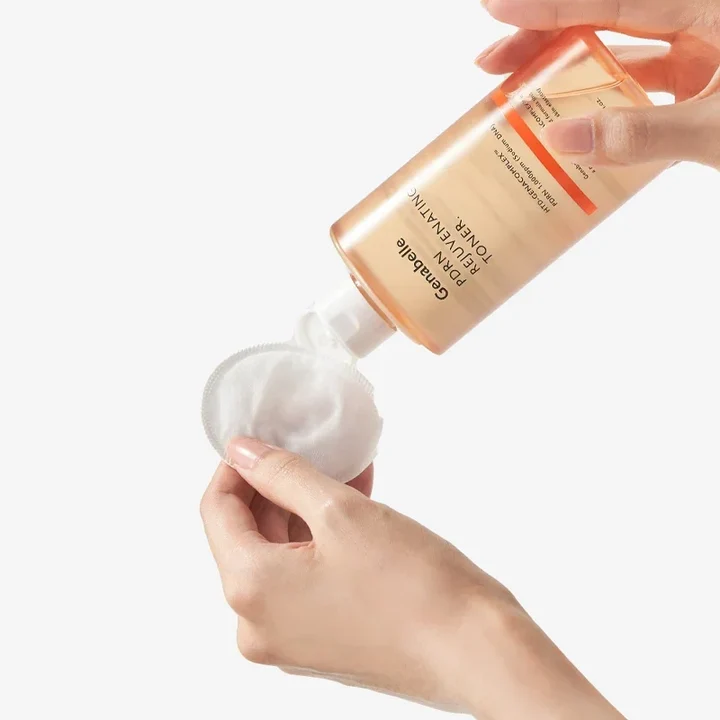
Genabelle PDRN Rejuvenating Toner
If you are looking for a light, layerable moisturising step in a glass skin routine, the Genabelle toner is a very nice candidate.
The formula contains glycerin, panthenol, niacinamide, PDRN (Sodium DNA), centella, beta-glucan and several types of hyaluronic acid derivatives. It can be used in multiple thin layers on dehydrated skin, if this feels comfortable for the skin.
Beauty of Joseon Glow Serum: Propolis + Niacinamide
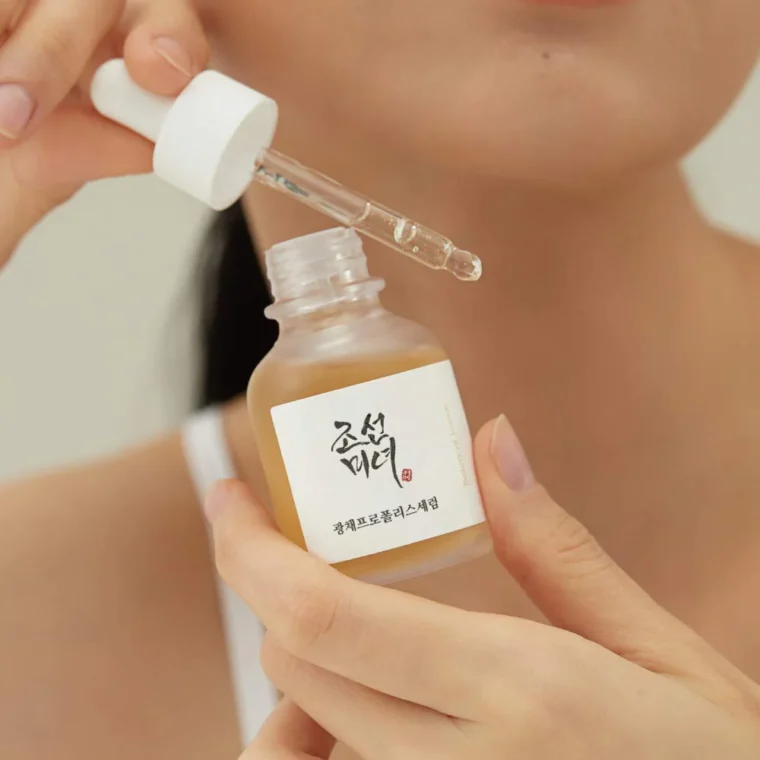
We like this one here because it serves a different purpose.
Alongside 60% propolis extract, the serum contains 2% niacinamide, glycerin, hyaluronic acid, and several plant-based ingredients, making it interesting for those who want not only hydration but also a brighter, more balanced complexion.
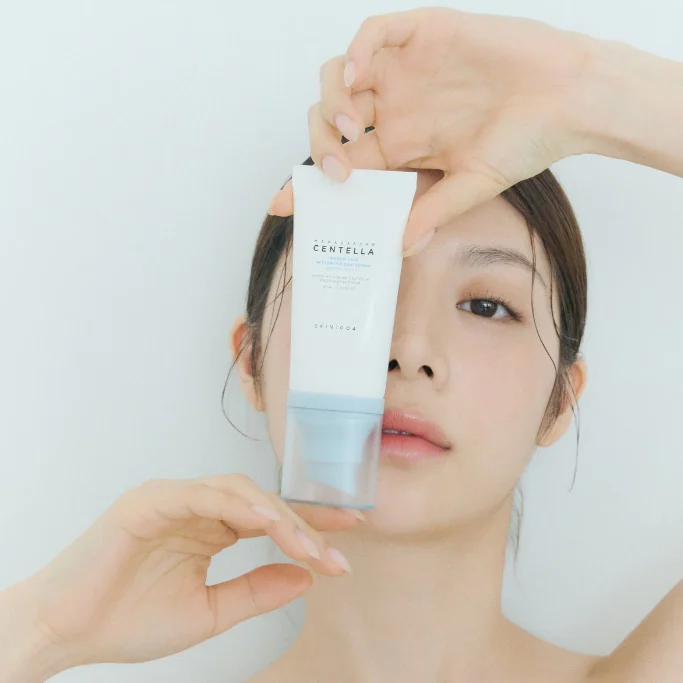
SKIN1004 Madagascar Centella Hyalu-Cica Water-Fit Sun Serum SPF50+ PA++++
By the end of the morning routine, we would choose a light sunscreen whose finish also complements the glass skin appearance well.
THE SKIN1004 fényvédője glicerint, niacinamidot, centellát és hialuronsav-származékokat is tartalmaz, és hidratált, harmatos finisht ad a bőrnek.
And where is the cream?
We deliberately do not want to appoint a single “glass skin cream” as the winner here.
The right moisturizer is very skin-dependent. Dry skin may require a completely different cream than oily, dehydrated, or sensitive skin.
The best glass skin moisturizer is the one that properly hydrates and comfortably maintains your skin – not the one that has the word glow in its name.
We believe this is a more useful aid than adding a fifth bottle to the basket.
⚠️ What will not make your skin glass-like
Excessive exfoliation. A smoother surface can indeed contribute to a more radiant appearance. However, this does not mean that the more we exfoliate, the brighter the skin will become. Irritation and a damaged barrier can lead in exactly the opposite direction.
Ten new products at once. If you have been using three products so far, you do not need to switch to ten from tomorrow. Not only can it be unnecessary, but it also makes it harder to find out which product your skin likes – or does not like –
Chasing the “glow” at all costs. Radiance cannot be more important than the comfort of your skin. If a trend causes your skin to sting, burn, peel, or remain persistently red, then you should not look for another product to follow the trend, but rather reconsider your routine.
Copying someone else’s skin. An influencer’s ten-step routine will not automatically become your glass skin routine. And fortunately, it doesn’t have to be.
❓ Frequently Asked Questions about glass skin
Can I have glass-like skin even if my pores are visible?
Yes. Pores are a natural part of the skin. Glass skin does not mean porelessness, but rather a more hydrated, smoother, and radiant overall appearance.
Is glass skin the same as shiny or oily skin?
No. The shine caused by excessive sebum production and the natural radiance of hydrated skin are not the same.
Is a 10-step routine necessary?
No. A routine that supports hydrated, healthy glowing skin can be built with three to five well-chosen steps.
Is exfoliation necessary?
Not necessarily. A properly chosen exfoliant can help smooth the skin surface in certain skin conditions, but it is not an obligatory part of a glass skin routine.
How long does it take to achieve glass skin?
There is no universal answer to this. After using a moisturising product, the skin may appear plumper and fresher immediately, whereas improving uneven skin tone, pigmentation spots, or other skin issues can be a much longer process.
Therefore, the goal should not be a deadline, but a routine that your skin will love in the long term.
Is the glass skin effect achievable with makeup?
Optically, yes. Hydrating primers, makeup products with a more luminous finish, and highlighters can all enhance the radiant effect.
However, this is not the same as improving the skin’s hydration, comfort, or condition – and naturally, the two can coexist peacefully.
💜 Glass skin is not synonymous with perfection
Perhaps this is the most important thought to take away from this article.
Glass skin may inspire you to pay more attention to hydration, treat your skin more gently, consistently use sunscreen, and choose targeted active ingredients more consciously.
But you do not have to erase every natural feature of your skin to be beautiful.
A pore is not a flaw.
Texture is not a flaw.
A fine line is not a flaw.
Radiant skin does not shine because it is perfect.
But because it feels good in its own skin.
And perhaps so do we. 💜
📚 References
Sethi A, Kaur T, Malhotra SK, Gambhir ML. The Skin Barrier and Moisturisation: Function, Disruption, and Mechanisms of Repair. Journal of Clinical Medicine. 2023. – An overview of skin barrier function, water loss, and the various mechanisms of moisturising products. PubMed
Hughes MCB, Williams GM, Baker P, Green AC. Sunscreen and prevention of skin aging: a randomised trial. Annals of Internal Medicine. 2013;158(11):781–790. – A randomised study involving 903 adults on the relationship between regular sunscreen use and skin ageing. PubMed
